

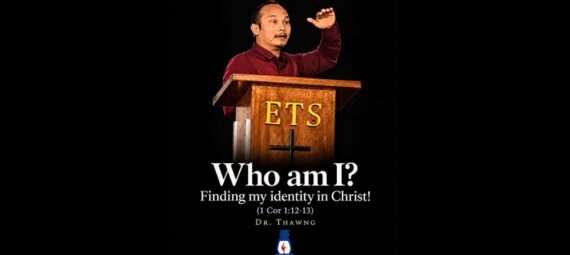
Who am I? Where do I belong? These two questions sit at the centre of every human life. We wrestle with them from childhood through adulthood — shaping how we relate to others, how we define success, and how we face suffering.
Most of us answer through our associations. We point to our family, our denomination, our profession, our institution, or our theological tradition. These markers feel solid. They tell us where we stand and who stands with us.
This pattern is not new. It was alive and well in the Greco-Roman world too. Status and prestige often came through association with respected teachers, schools of thought, or social networks. Identity was often borrowed from the groups we belonged to.
The Corinthian church absorbed this same cultural habit. Paul heard them saying:
- “I belong to Paul.”
- “I belong to Apollos.”
- “I belong to Cephas.”
- “I belong to Christ.”
(1 Corinthians 1:12)
Paul is not simply addressing a problem of division. He is confronting something deeper: a crisis of identity.
Human Associations Can Become the Foundation of Our Identity
Paul, Apollos, and Cephas were respected Christian leaders. But the Corinthians had turned their association with these leaders into the foundation of their identity.
- Paul could represent foundational apostolic authority.
- Apollos could represent eloquence, education, and intellectual prestige.
- Cephas could represent apostolic seniority and Jewish-Christian credentials.
The problem was never that these leaders were unimportant. The problem was that their followers let human associations define who they were.
Paul makes the point unmistakably clear:
“What then is Apollos? What is Paul? Servants through whom you came to believe.”
1 Corinthians 3:5
The servants were never the source of the church’s identity. God is.
Our Identity Must Be Rooted in the Crucified Christ
Paul’s decisive question cuts straight through the confusion:
“Is Christ divided? Was Paul crucified for you? Or were you baptized in the name of Paul?”
1 Corinthians 1:13
These questions expose the heart of the problem.
- No apostle was crucified for us.
- No pastor was crucified for us.
- No professor was crucified for us.
- No denomination was crucified for us.
Christ was.
Therefore, the cross — not our human associations — determines our deepest identity.
Baptism carries the same declaration. It says we belong to Christ. Our ultimate identity is not found in the preacher we admire, the tradition we grew up in, or the institution we represent.
“We belong to Christ.”
What Does This Mean for Us?
This truth reshapes how we live.
- “Whose student am I?”
- “Whose follower am I?”
- “Which institution do I belong to?”
- “Which tradition do I represent?”
Paul’s vision calls us away from these markers as foundations of identity:
- Heritage: Do not build your identity primarily on heritage or tradition.
- Knowledge: Do not build your identity on academic ability or intellectual achievement.
- Association: Do not allow association with a respected leader, institution, or theological tradition to become a substitute for your identity in Christ.
For students: pursue excellence in Greek, Hebrew, theology, and biblical studies. But let scholarship produce humility and service, not a new form of identity-based pride.
For professors and ministers: use your gifts to equip people rather than impress them.
The deeper question is simply this:
“Who am I?” — And the answer is: I belong to Christ.
Conclusion
When Christ becomes the centre of our identity, everything shifts. Division gives way to unity. Pride gives way to humility. Competition gives way to collaboration. And the question “Who am I?” finally finds its true and lasting answer.
As Paul reminds us: “For no one can lay any foundation other than the one that has been laid; that foundation is Jesus Christ.” (1 Corinthians 3:11)
Our associations matter. Our traditions matter. Our institutions matter. But none of them can bear the weight of our ultimate identity. Only Christ can.
— Dr Thawng